"La humanidad no encontrará la paz hasta que no vuelva con confianza a mi Misericordia" (Jesús a Sor Faustina)

sábado, 23 de febrero de 2019

Cuando la política se convierte en religión, el partido político se vuelve una secta


Al mejor estilo de los líderes sectarios, que buscan adoctrinar desde edades muy pequeñas,
hay partidos políticos en Argentina que, utilizando esos mismos métodos totalitarios, pretenden instalar la idea de que ese partido político es una especie de mesías salvador, cuando en realidad es una secta disfrazada de ideología política.


Escrito por Juan Carlos

SI SOS PERONÍSTA Y POBRE, ÉSTO ES PARA VOS..!!!. . : Me crié en una villa muy pobre donde no estaba garantizada la comida diaria, escuchando a borrachos e ignorantes gritar ¡Viva Perón carajo...!!! Aunque nuestras condiciones precarias de vida no cambiaba.... Ví fotos de Perón y Evita colgadas en paredes de cartón y barro, todo porque alguna vez los asistieron con un pan dulce y sidra o una frazada. Recuerdo que en las comisiones barriales que habían en ese entonces, dictaban distintos talleres, también catecismo y en todos nos hacían estudiar de memoria la marcha peronista...(algo no me cerraba porque yo iba a catecismo) Por suerte estudié y además creo que la dignidad y la vergüenza de verme adulto, haciendo cola por un pan dulce que podía lograrlo trabajando me dieron la fuerza para esforzarme, desviar mi destino peronista y salir adelante por mis propios medios. Estudié sin ningún apoyo económico y hasta sin ningún estimulo de mi entorno, al contrario, parece que molestaba que alguien quiera superarse, se autolimitaban, se ponían techo y se incomodaban. Hoy soy un profesional, por el camino trabaje en lo que pude, aprendí a manejar herramientas, no quiero nombrar mis logros económicos pero les cuento que tengo lo suficiente para estar bien. Además como todos los días Gobierne quien Gobierne, me afecta la situación económica como a todos pero no tanto como a ese entorno de mi infancia que, muchos de ellos, siguen igual que antes y esperando que vuelva el PJ o kristina. ¡No soy Macrista! quiero algo diferente para mi país. Se, por experiencia, que los cambios no se dan de la noche a la mañana. demandan esfuerzo, sacrificio y perseverancia. Conozco también , en primera persona, la estrategia de la mala politica: fomentar los asentamientos (villas), generar pobreza económica, mental y necesidades en la gente para luego asistirlos con dádivas y apelando al sentimiento, quedar grabados en las cabezas de esas pobres gentes (con muchas necesidades y poco entendimiento) como los salvadores, los grandes preocupados de sus situación, crearles dependencia para luego usarlos en cada elección.

(https://www.facebook.com/NoSomosBoludos/photos/a.258717114837722/329992281043538/?type=3&theater)

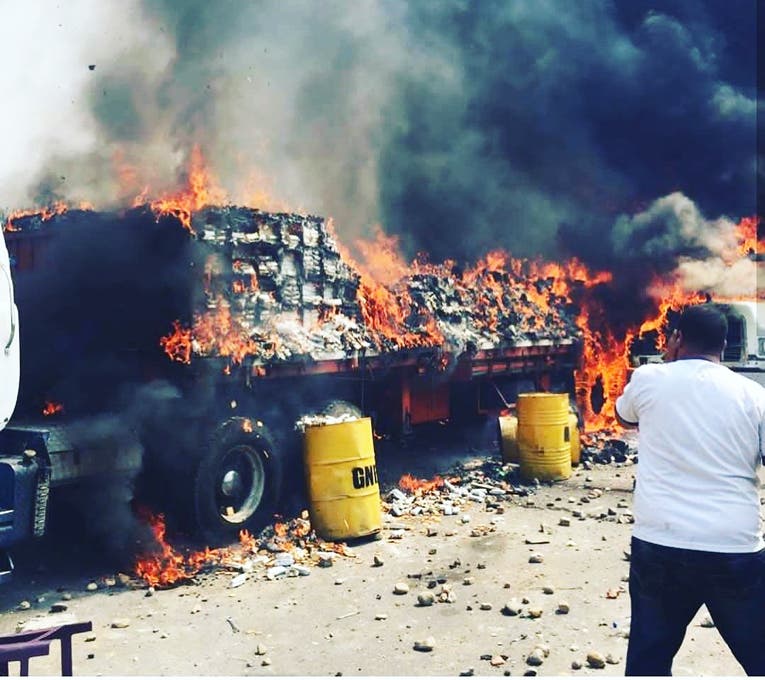
La malicia sin límites del tirano comunista Maduro: ordena incendiar camiones con ayuda humanitaria


Tres camiones repletos de ayuda humanitaria fueron incendiados este sábado en un puente en la frontera entre Colombia y Venezuela, cuando los militares chavistas bloqueaban el paso de una caravana de cuatro furgones y lanzaban bombas lacrimógenas contra manifestantes.

El presidente interino, Juan Guaidó, denunció el sábado la situación en sus redes sociales, pero aseguró que los voluntarios estaban trabajando en rescatar la comida y medicamentos del cargamento. 

"El régimen usurpador se vale de los actos más viles e intenta quemar el camión con ayuda humanitaria que se encuentra en Ureña", escribió Guaidó en Twitter. "Nuestros valientes voluntarios están realizando una cadena para salvaguardar la comida y las medicinas", agregó.

Por su parte, la diputada nacional Gaby Arellano confirmó que uno de los camiones con destino a Venezuela fue efectivamente incendiado por el régimen de Nicolás Maduro.

Arellano, miembro de la Asamblea Nacional de mayoría opositora, se encontraba en la primera línea en el paso fronterizo de la ciudad de Ureña, y denunció haber sufrido una fuerte represión, antes de que fueran atacados los camiones con ayuda.

"La gente está salvando la carga de la primera gandola (camión) y cuidando la ayuda humanitaria que (el presidente Nicolás) Maduro, el dictador, mandó a quemar", dijo a periodistas la diputada opositora.

De acuerdo con la agencia EFE, un grupo de manifestantes, la mayoría encapuchados, destruyó este sábado al menos dos autobuses y uno fue incendiado, en medio de los disturbios por el cierre de los puentes que comunican ambas naciones ordenado por el Gobierno de Nicolás Maduro.

Los manifestantes usaron piedras y palos para romper los vidrios de estos vehículos rojos, que son un signo propagandístico del chavismo gobernante en Venezuela.

Las unidades de transporte estaban dentro de una escuela a la que ingresaron varios de los encapuchados, luego de correr de allí a un centenar de chavistas que estaban pernoctando en el sitio.

Los enfrentamientos entre ciudadanos y miembros de la Fuerza Armada Nacional Bolivariana que iniciaron cerca de las 10:00, hora GMT, en Ureña se han mantenido al menos durante ocho horas y han dejado una veintena de lesionados, tres de ellos por perdigones.

Las fuerzas del orden han lanzado decenas de bombas lacrimógenas y han disparado perdigones contra los ciudadanos, dejando un muerto y varios heridos.

Casi todos los comercios en la localidad están cerrados así como la vía que comunica con San Antonio del Táchira, otro municipio fronterizo.

Las personas se mantienen en las calles a la espera de la ayuda humanitaria que la oposición venezolana intenta ingresar desde los puentes binacionales, como el Francisco de Paula Santander, en Ureña, una actividad liderada por el jefe del Parlamento, Juan Guaidó, que hace un mes anunció asumir las funciones de presidente encargado.

Sin embargo, el bloqueo de las comunicaciones terrestres, ordenada por el Gobierno de Maduro, se mantiene en las fronteras, no solo con Colombia sino también en los límites con Brasil y la isla de Curazao.

Guaidó ha asegurado que la ayuda proveniente de Colombia ya se encuentra en territorio venezolano pero ha sido detenida por el Gobierno de Maduro.

El gobernante chavista ha reiterado su rechazo al ingreso de las ayudas que se almacenan en las fronteras con Colombia y Brasil y ha asegurado que estos alimentos son "cancerígenos" o "podridos", sin mostrar pruebas.

Asimismo, se ha referido al cierre de las comunicaciones con las islas de Aruba, Bonaire y Curazao, todos territorios políticos de Países Bajos, y aseveró que se vio obligado a hacerlo porque se estaba "preparando una provocación" que busca derrocarlo.

Una imagen aérea de los episodios en la frontera (@WCKitchen)


Fuente: https://www.infobae.com/america/venezuela/2019/02/23/juan-guaido-denuncio-que-el-regimen-de-nicolas-maduro-incendio-uno-de-los-camiones-con-ayuda-humanitaria/
(https://www.contextotucuman.com/nota/141617/el-tirano-maduro-ordeno-incendiar-tres-camiones-con-comida-y-remedios.html)

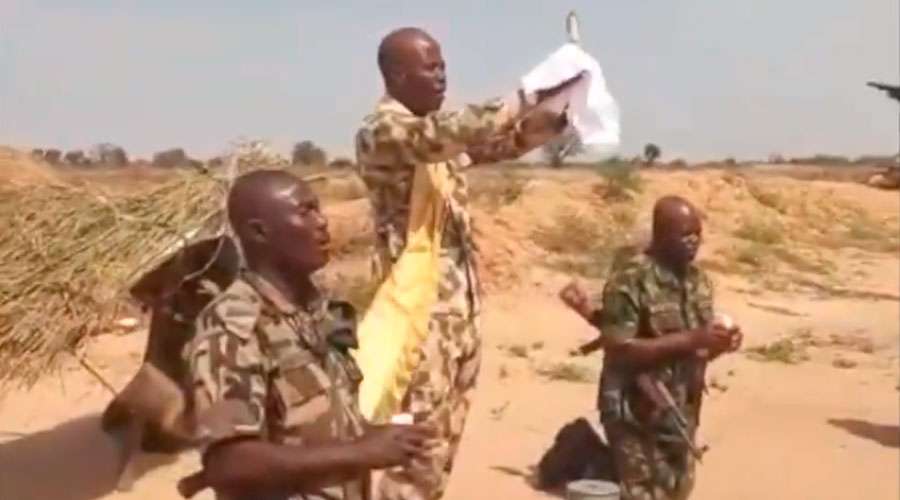
VIRAL: Video de soldados que reciben bendición con Santísimo Sacramento conmueve a miles

Resultado de imagen para soldados nigerianos reciben bendición con el santísimo sacramento

Soldados nigerianos reciben la bendición con el Santísimo antes de dirigirse
a la batalla contra la milicia islámica Boko Haram.
¡El Dios de la Eucaristía les dará el triunfo!

No podemos subir el video, pero dejamos el enlace:

https://www.youtube.com/watch?v=yUK2-FXb9_g

22 de febrero de 2019
Redacción ACI Prensa

En las redes sociales ha comenzado a circular un video en el que se ve a un grupo de soldados de Nigeria, en medio del desierto, siendo bendecidos por el capellán con el Santísimo Sacramento antes de ir a enfrentarse al grupo terrorista islámico Boko Haram.

En el video se aprecia al capellán dirigiendo el momento de Adoración Eucarística, con los soldados cantando.

El capellán, de rodillas como el resto de soldados, dice “¡Jesús es el rey!”, frase que es repetida varias veces por los efectivos militares.

El video ha sido compartido por la cuenta de twitter de Catholic Connect y Ayuda a la Iglesia que Sufre (ACS) – Italia.

Diversos usuarios comentan el video, como Michael S. Miller quien asegura que lo va a guardar para mirarlo “cada vez que quiera dar una excusa para no ir a la adoración”.

Por su parte el usuario Izuchukwu eke aloy afirma que “Jesucristo nunca les fallará” a los soldados y “nos dará la victoria sobre las fuerzas del mal. Amén”.

Teri Medina señala que le gustaría “mostrárselo a todos en Occidente y Europa. Incluso cuando nuestro sacerdote dijo un día que arrodillarse no era la costumbre en los comienzos. Es porque estamos llenos de orgullo”.

En 2015 los terroristas de Boko Haram juraron lealtad al Estado Islámico.

Boko Haram es responsable de la muerte de miles de personas y del secuestro de niñas, especialmente cristianas para forzarlas a convertirse al islam.

Aunque Nigeria se alió con Níger y Chad para crear una fuerza que enfrente a Boko Haram, la amenaza aún no ha podido ser erradicada.

En abril de 2015 el Obispo de Maiduguri (Nigeria), Mons. Dashe Doeme, aseguró que la oración del Rosario es el arma para vencer al “demonio del terrorismo” de Boko Haram que persigue a los cristianos.

El Prelado hizo esa afirmación en el congreso “Todos somos Nazarenos” realizado en Madrid, España, donde contó una intensa experiencia espiritual personal que le permitió comprender un poco más la fuerza de la oración mariana.

Etiquetas: Nigeria, Boko Haram, Video viral, Santísimo Sacramento, adoración eucarística
(https://www.aciprensa.com/noticias/viral-video-de-soldados-que-reciben-bendicion-con-santisimo-sacramento-conmueve-a-miles-31426?fbclid=IwAR0O_KKnzlCaK-Y-GfPXjQV-mXBs3pNXEJbaFzSplGW4by_gS45VPv_QdSs)

Desmintiendo la Leyenda Negra: España respetó siempre las lenguas indígenas

La imagen puede contener: una persona

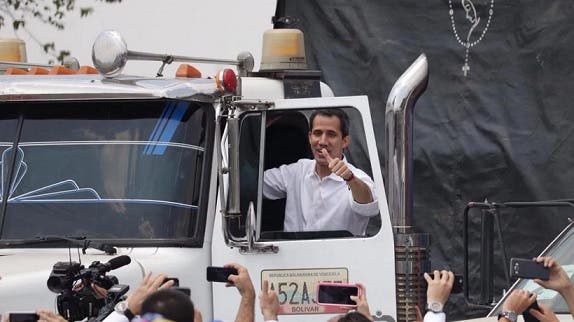
Primer camión con ayuda humanitaria ingresa en Venezuela a pesar de la oposición del dictador comunista Maduro


Juan Guaidó, Presidente de Venezuela, encabeza la columna con ayuda humanitaria
que ingresó en Venezuela, a pesar de la oposición del tirano comunista Maduro.

En medio de incidentes entre manifestantes y militares, el primer camión con la ayuda humanitaria logró pasar la frontera con Brasil este sábado al mediodía a Venezuela a pesar del cierre de frontera ordenado por el presidente Nicolás Maduro.

El hecho ocurre en medio de un forcejeo entre la dirigencia de oposición y el gobierno chavista por el reconocimiento de las Fuerzas Armadas. Esta semana, los militares recibieron órdenes de Maduro de cerrar la frontera de Brasil y todos los puentes fronterizos con Colombia para no permitir el ingreso de la ayuda humanitaria.

Guaidó, por su parte, desde Colombia instó a los uniformados a no reconocer al gobierno chavista y les ofreció una amnistía a cualquiera que estando en la frontera huya al vecino país.

Mientras el primer camión logró ingresar por Brasil, en Cúcuta, Colombia, se registraron enfrentamientos entre manifestantes y los cuerpos de seguridad del Estado que reciben órdenes de Maduro.

Para Guaidó que ingresara parte de la ayuda humanitaria es "un gran logro". "Anunciamos oficialmente que ya entró el primer cargamento de ayuda humanitaria por nuestra frontera con Brasil. ¡Esto es un gran logro, Venezuela!", celebró en Twitter.

En mi condición de Comandante en Jefe de la Fuerza Armada Nacional, dadas las circunstancias excepcionales que vive la República, dejo sin efecto la calificación de Traidores a la Patria, para efectivos militares que crucen la frontera.#23FAvalanchaHumanitaria

— Juan Guaidó (@jguaido) 23 de febrero de 2019


¡Atención Venezuela! 

Anunciamos oficialmente que YA ENTRÓ el primer cargamento de ayuda humanitaria por nuestra frontera con Brasil. 

¡Esto es un gran logro, Venezuela! 

¡Seguimos! #23FAvalanchaHumanitaria

— Juan Guaidó (@jguaido) 23 de febrero de 2019

Antes, el presidente de la comisión parlamentaria para la ayuda humanitaria a Venezuela, Miguel Pizarro, había informado sobre ese ingreso.

"Nuestra embajadora (en Brasil) Teresa Belandria y todo nuestro pueblo (indígena) pemón nos acaba de anunciar que ya ha entrado a territorio venezolano el primer camión de cargamento de medicinas de la ayuda humanitaria", dijo Pizarro al ofrecer un balance de lo que ocurre en el país en el marco del ingreso de estas ayudas que Maduro rechaza.

El parlamentario indicó que el ingreso se logró producto de la "lucha" y la "movilización", pero no detalló cómo ocurrió.

Sin embargo, el diputado Américo De Grazia indicó que tras el paso "triunfal" del primer camión a territorio venezolano, la Guardia Nacional Bolivariana (GNB, policía militarizada) "reprime con gases lacrimógenos" a los habitantes del estado Bolívar, fronterizo con Brasil.

Además, según la oposición, en las próximas horas llegará a las costas venezolanas un buque con toneladas de ayuda humanitaria desde las islas holandesas en el Mar Caribe.


Fuente: https://tn.com.ar/internacional/ingreso-el-primer-camion-con-ayuda-humanitaria-venezuela-con-juan-guaido-la-cabeza_942872
(https://www.contextotucuman.com/nota/141604/ingreso-el-primer-camion-con-ayuda-humanitaria-desde-brasil-a-venezuela-con-juan-guaido-a-la-cabeza.html)

Cómo convertir la islamofobia en un crimen


Ver también: 
https://www.youtube.com/watch?v=Q39uN2z2ejI

Las estadísticas y el significado del Islam

Resultado de imagen para islam agresivo

Statistics and the Meaning of Islam
Nov 6 2008 | by Bill Warner

Statistics and the Meaning of Islam
What is the “real” Islam? Is it the Islam of the nice Muslim at work? Or is it the Islam of Osama bin Laden?

To get a logical answer, we must have a logical basis. What sources are available to answer the question? We can toss out the media and all of its answers since they generally quote apologist “experts”. But is there an expert we can trust? Yes, there is. Mohammed.

The most fundamental statement that can be made about Islam is: there is no god but Allah and Mohammed is His prophet. This is the bedrock of Islam and points us directly to the only sure source of Islam-Allah and Mohammed. But where are Allah and Mohammed found? The Trilogy of Koran, Sira and Hadith. Allah is found in the Koran and Mohammed is found in the Sira (his biography) and the Hadith (his traditions of small stories and sayings). There is a special name for the sum of the Sira and the Hadith, the Sunna.

The Koran and Sunna are the only sure and certain basis of Islam. All of Islam is based upon the Trilogy.

The foundational texts of Islam –the Trilogy–suffer from being deliberately difficult. It is clear to anyone who reads these texts that every effort has been made to make the material obscure and difficult. There are two reasons for this obscurity. First, difficult texts make for a secure job for the priestly caste, the imams and scholars. If the text is clear in meaning, then no help is needed to understand it. The second reason is that the texts contain horrible and contradictory messages for the world buried under the obscurity.

The usual response to this difficulty is to skip the editing and offer up some verses from the Koran. But “verse” is a biased word in that it invokes a religious overtone. In almost every case, a verse is nothing more than a sentence. There is no other field of study in which individual sentences are given so much weight.

“Verse picking”, to use a statistical term, is a very poor sampling method. What we want is the meaning, and it is impossible to learn the complete meaning from a sentence. What we need to concern ourselves with are ideas and concepts, not simply a sentence.

Let us be clear here that the very best way to obtain the complete meaning is to edit (edit does not mean change the meaning, but to order, rearrange and collect) the texts and then proceed from the edited text. The Koran is famously difficult. However, if the necessary editing is done, the Koran is a very straightforward document. The first editing steps are to put the Koran in order with respect to time. In this way when you turn the page, you advance in time, just as you would in a history book. This time line order has been known since the first days of Islam. The next step is to collect all of the variations of the same story. As an example, the story of Moses and the Pharaoh is told 39 times. If they are all collected under one category, then the Koran is easier to read and less boring.

The next step is to take the Sira and weave it into the Koran to give the Koran a context. For example, there is a verse that says that it was proper to burn the palm trees. For someone who reads this verse, a question arises: what palm trees are being talked about? The Koran gives no context. But in the day of its creation, everyone who heard the verse knew that the previous week, Mohammed had attacked some Jews who were date farmers and had destroyed their date palm trees in violation of Arabic war customs. When the story of Mohammed (from the Sira) is woven into the Koran, then the context of the attack on the Jews is clear.

A Koran that is in the proper time order, categorized, and includes Mohammed’s life is a straightforward book that is easily understood. CSPI has published two Korans that have been edited this way- A Simple Koran and an Abridged Koran.

But we still have a problem. We need to be able to discuss the Koran with those who do not have access to edited Korans or who would not read them anyway. We need to be able make meaningful summary statements. Picking your favorite verse is not the way to make a summary statement.

We need a method of macro-analysis, not micro-analysis. We need to be able to talk about the big picture, the complete meaning of Islam. But there is a problem in trying to summarize Islam as it is filled with contradictory statements. So how do we deal with the contradictions while looking at the big picture?

The answer to these questions is to use a statistical measure of the texts. Don’t let the word statistics scare you. The only statistics needed is counting how many items are in a category.

Take for example the idea of the importance of the Koran. The most commonly belief about Islam is that it is based upon the Koran and is a religion. Neither of these ideas is true.

How important is the Koran? It contains about 153,000 words. The Sira (by Ibn Ishaq) contains about 292,000 words, and the Hadith has 646,000 words (using the Bukhari text). So Allah is about 14% of the total of the Trilogy and the Sunna (Mohammed’s words and deeds) is 86% of the total. These are only a quantitative measure, but still, it points out how important Mohammed is compared to Allah, based upon the amount of text.

This is born out further by noticing that the Koran does not contain enough information to practice even one of the Five Pillars of Islam. Only the Sunna (primarily the Hadith for religious practice) tells the Muslim how to worship. So the statistical measure shows that Islam is also Mohammedism.

Once the Koran is rearranged in the right time order, categorized and Mohammed’s life is woven back into it, another fact leaps from the page. Very little of the Koran is devoted to how to be a Muslim, the religion of Islam. Instead, the majority of the Koran is about kafirs, non-Muslims. Kafirs are the worst of the creation. Allah hates kafirs and plots against them. Kafirs can be tortured, murdered, robbed, raped and enslaved. The Koran is fixated on kafirs, as was Mohammed.

To measure the Koranic fixation on kafirs, let us measure the fixation by counting the amount of text devoted to them. In Mecca an astounding 68% of the text is devoted to the kafir. In Medina 57% was about kafirs. The amount of text in the entire Koran devoted to kafirs is 51%.

As an aside, Islam excludes kafirs in every way from its religious practice. Since the kafir is outside of Islam, the term political Islam is used to describe the doctrine of Islam as it is applied to the “others”, the kafirs. So 51% of the Koran is about political Islam, not religious Islam. (KS Lal gives the figure of 63% in Theory and Practice of Muslim State in India, Aditya Prakashan, 1999, N. Delhi, pg. 4).

The Sira shows the importance of Islam’s political nature. Mohammed preached the religion of Islam for 13 years in Mecca and only gained 150 followers. He moved to Medina where he became a politician and warrior. After 10 years of violence he became ruler of all Arabia without a single enemy left standing. He was involved in an event of violence every 6 weeks for the last 9 years of his life. Statistical conclusion-Islam’s success came from war and politics, not religion.

Another statistical conclusion: Islam is primarily a political doctrine, not a religion.

Simple statistics also reveal the true nature of the political/religious idea of jihad. When the word jihad is used, Muslims say that there are two kinds of jihad. There is the religious jihad, the greater jihad–the inner struggle against personal problems. The war jihad is the lesser jihad.

The Hadith of Bukhari gives all of the tactical details of jihad. A simple counting method shows that 3% of the hadiths are about the inner struggle, whereas, 97% of the hadiths are about jihad as war. So is jihad the inner struggle? Yes, 3%. Is jihad the war against kafirs? Yes, 97%.

This leads to a very important concept. Islam is based upon contradictory statements. How do we sort them out to get the complete meaning? We measure the amount of text devoted to each side of the dichotomy. That is what we did with the question of which jihad is the real jihad. It gives a complete statistical answer.

There is nothing new here. Only single value state ideas can be measured by one number. Multi-state ideas must be evaluated by statistics that measure every state of the variable. If an idea has different manifestations, then instead of arguing which is the right manifestation, just measure all of the manifestations.

There is an exact analogy to the measurement of the state of the electron in an atom. Quantum physics does not give a single answer about the energy and position, but gives us the statistical probabilities of each possible state. The same is true about Islam. We need to know its total state, not something about one category.

In conclusion, statistics is a superior way to gain complete knowledge of the texts of Islam. Statistics allows us to explore Islam in its totality. Remember the old story of the blind men feeling the elephant? One said the elephant was like a rope, another a tree, a wall and so forth. Was each man right? Were any of them wrong? No. But none of them were completely right. Statistical analysis cannot tell us the qualitative story but it allows us to remove the blinders of only looking at one category and forces us to look at the total picture.

Notice that this approach also effectively tells us how to evaluate the “experts” that get trotted out to buttress a favorite position. This is the iron rule of Islam-only Mohammed defines the truth of Islam. If what an expert says agrees with Mohammed, then the he is right, but he is redundant. If what the expert says contradicts Mohammed, then the expert is wrong. So experts are either redundant or wrong. Only Mohammed tells us the truth about Islam and he is never wrong or redundant. Skip the experts and move straight to Mohammed. The statistical approach does just that.

Bill Warner

Permalink http://politicalislam.com/statistics-and-the-meaning-of-islam/

Copyright © 2008 CBSX, LLC

politicalislam.com

Use and distribute as you wish; do not edit and give us credit.
(https://www.politicalislam.com/statistics-and-the-meaning-of-islam/?fbclid=IwAR1-0SqsXNuQOw5XS9K88LT5cRLATF39nBTgWKV9kVJ23LtlXV9Uew6b9bc)