"La humanidad no encontrará la paz hasta que no vuelva con confianza a mi Misericordia" (Jesús a Sor Faustina)
Mostrando entradas con la etiqueta Sri Lanka. Mostrar todas las entradas

martes, 30 de abril de 2019

Mujer católica pierde a toda su familia en los ataques de Sri Lanka

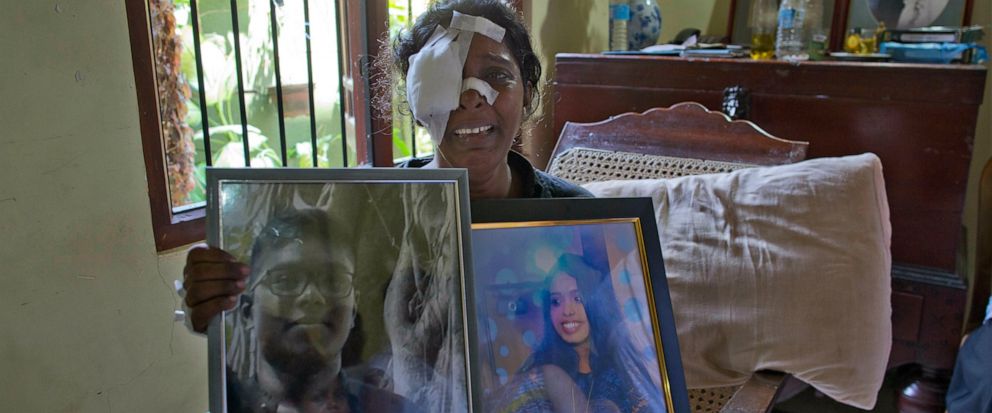
Anusha Kumari holds portraits of her daughter Sajini Venura Dulakshi and son Vimukthi Tharidu Appuhami, both victims of Easter Sundays bomb blast in Negombo, Sri Lanka, Wednesday, April 24, 2019. Kumari, 43, was left childless and a widow when suici

Mujer católica muestra los retratos de sus seres queridos, asesinados por 
una secta musulmana en Sri Lanka, durante la celebración de la Santa Misa de Resurrección.

ByEMILY SCHMALL, ASSOCIATED PRESS NEGOMBO, Sri Lanka — Apr 24, 2019, 9:17 PM ET
 Anusha Kumari holds portraits of her daughter Sajini Venura Dulakshi and son Vimukthi Tharidu Appuhami, both victims of Easter Sundays bomb blast in Negombo, Sri Lanka, Wednesday, April 24, 2019. Kumari, 43, was left childless and a widow when suiciThe Associated Press
Anusha Kumari holds portraits of her daughter Sajini Venura Dulakshi and son Vimukthi Tharidu Appuhami, both victims of Easter Sunday's bomb blast in Negombo, Sri Lanka, Wednesday, April 24, 2019. Kumari, 43, was left childless and a widow when suicide bombers launched a coordinated attack on churches and luxury hotels in and just outside Sri Lanka’s capital, Colombo. (AP Photo/Gemunu Amarasinghe)
Email
Before the undertakers could move in, Anusha Kumari wrested herself away from her sisters and flung herself on the three coffins, wailing. In an instant, she was left childless and a widow when suicide bombers attacked churches and luxury hotels in and near Sri Lanka's capital of Colombo.

The toll was highest at St. Sebastian's Church in Negombo. Of the more than 350 people killed by the suicide bombings that the government blamed on Muslim extremists, about a third of them died at the church in the seaside fishing town while attending Easter Mass.

And perhaps no one lost more relatives than 43-year-old Kumari, whose daughter, son, husband, sister-in-law and two nieces were killed.

They were buried three days later near the church on vacant land that has quickly become a cemetery for the victims.

Kumari, who was injured from the blast, left the hospital to bury her family. Afterward, she reclined in a cane chair at her home, hooked up to an IV dangling from an open window. Gauze bandages covered the bridge of her nose and her right eye. There was still shrapnel in her face.

A photo of her children was on the wall, while on the shelf were small statues of Jesus, Mary and St. Sebastian, an early Christian martyr riddled with wounds from Roman arrows.

She could see her son's drum kit on the upstairs landing, a gift from his father after doing well on exams, and a school portrait of her daughter. All day, relatives, neighbors and nuns wandered in and out of the large house, offering food, consolation and prayer.

"You won't believe it, but I had the perfect family," Kumari said. "In 24 years of marriage, my husband and I never argued. All four of us slept in the same room. Now I have lost everything."

Tears mixed with blood from her bandaged right eye.

"All these people, they have their own families. They'll go home and I'll be alone," she said.

A brother-in-law, Jude Prasad Appuhami, said his extended family, one of the oldest and most prominent in Catholic-majority Negombo, marked all the religious holidays and rituals at St. Sebastian's, a Gothic-style church patterned after Reims Cathedral in France.

On Easter, though, he wasn't in church with his 15 relatives because he had to drive a vehicle carrying a statue of Christ for a parade after Mass.

Appuhami arrived midway through the service and heard the blast from the parking lot. He rushed in and was overwhelmed by the sight of so much blood. One of his sisters-in-law, who survived, shouted for him to help their niece.

He found her with her eyes open, picked her up and rushed to the hospital, only to realize she was dead.

Appuhami's wife and 10-year-old daughter, sitting in an alcove to the left of the altar, escaped with minor injuries. His 17-year-old daughter, Rusiri, who was sitting at the front of the church because she was going to do a reading from Scripture, also survived, but she was left with nerve damage that makes eating painful.

On Wednesday, she struggled to grasp what she has seen.

"I don't know how to think of it. It's like a dream," she said.

During the funeral at the makeshift cemetery near St. Sebastian's, where mourners had to pass through security checks, a military drone buzzed overhead as the Rev. Niroshan Perera led prayers for the dead.

Perera, who grew up with Kumari's husband, Dulip Appuhami, and his siblings, recalled going as a boy with his friends and family to the church's well, where the faithful believed the water could cure them of diseases.

When the funeral ended, Perera encouraged everyone to go home quickly, fearing another attack.

Perera, who lost 16 relatives and friends in the blast, said he no longer trusted the Sri Lankan government to protect his flock.

———

Associated Press journalist Gemunu Amarasinghe contributed to this report.
(https://abcnews.go.com/International/wireStory/sri-lankan-woman-loses-family-easter-bombings-62598733?fbclid=IwAR2OrByV4gZzGUTejXn-a94m26V3bW6iUAvDaDKIkHSasdSD5VLvaBdgsO8)

viernes, 26 de abril de 2019

Sri Lanka: Cierran iglesias católicas por temor a ataques terroristas

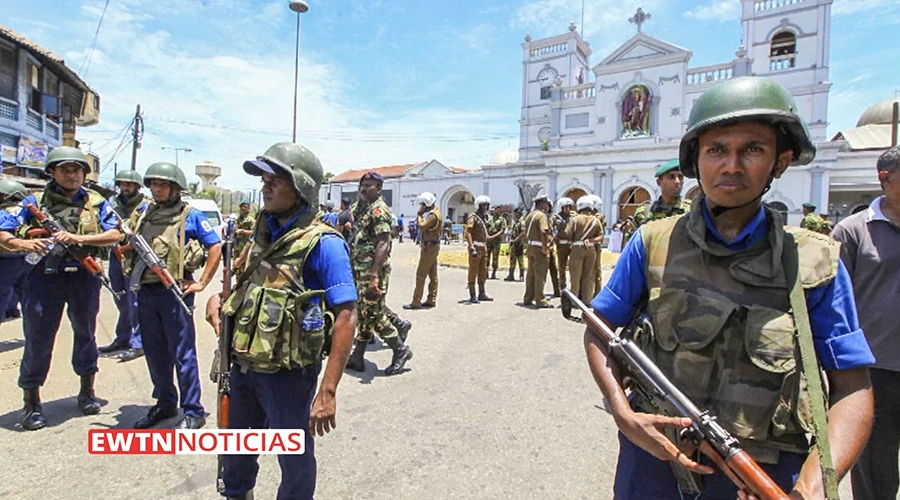
Atentado en Sri Lanka / Foto: Captura de vídeo (EWTN Noticias)

25 de abril de 2019
Redacción ACI Prensa
Atentado en Sri Lanka / Foto: Captura de vídeo (EWTN Noticias)
Las autoridades católicas de Sri Lanka informaron que todas las iglesias del país permanecerán cerradas y por el momento no se realizarán los servicios debido al temor de nuevos ataques, como los ocurridos el 21 de abril, cuando los cristianos celebraban la Resurrección de Cristo.

"Por consejo de las unidades de seguridad, mantendremos cerradas todas las iglesias", indicó un alto responsable de la Iglesia en Sri Lanka a la agencia AFP.

Tras los atentados terroristas ocurridos el Domingo de Pascua en dos iglesias católicas, un templo evangélico y cuatro hoteles en Sri Lanka, los cuales han causado la muerte de al menos 359 personas, se ha ordenado que todas las iglesias católicas permanezcan cerradas. De igual manera, se han suspendido los servicios hasta que mejore la seguridad.

"No se hará ninguna misa pública hasta nuevo aviso", expresaron. Por su parte, el Gobierno indicó que se ha incrementado la seguridad en todas las iglesias del país.

Las iglesias católicas afectadas tras la explosión de bombas fueron la iglesia de San Antonio, uno de los santuarios más representativos del catolicismo, situada en la ciudad de Colombo, y la iglesia de San Sebastián, ubicada en Negombo.

De acuerdo con la agencia EFE, a petición del presidente Maithripala Sirisena, las autoridades han desplegado casi 4.000 militares en todo el país, que incluye controles en carreteras, inspecciones de vehículos y patrullas a pie, entre otros.

Asimismo, tienen la potestad de detener o arrestar a sospechosos relacionados con los atentados sin orden judicial, según un comunicado del Ministerio de Defensa.

El Estados Islámico (ISIS) se ha adjudicado los ataques en Sri Lanka, el cual ha dejado cerca de 360 fallecidas y aproximadamente 500 resultaron heridas en las explosiones cometidas en diferentes lugares, incluyendo iglesias y hoteles de cinco estrellas, en Colombo, Sri Lanka. El país celebró un día nacional de luto el 23 de abril.

Los ataques terroristas ocurrieron el domingo 21 de abril, cuando se estaba celebrando el Domingo de Resurrección, la fecha más importante para el cristianismo en todo el mundo.
(https://www.aciprensa.com/noticias/sri-lanka-cierran-iglesias-catolicas-por-temor-a-ataques-terroristas-31441?fbclid=IwAR3q9TqvsFsEgiNXR2ykWg4WdlP4DS3Gey4xw-jOxpHoGCzmMWlcZXSombE)

miércoles, 24 de abril de 2019

El gobierno de Sri Lanka acusa a un grupo islamista local como responsable de los ataques terroristas

El interior del santuario de San Antonio en Kochchikade, que sufrió una explosión (ISHARA S. KODIKARA / AFP)

Una de las iglesias católicas destruidas por la secta islamista ISIS el pasado 21 de abril de 2019 en Sri Lanka.

El National Thowheeth Jama'ath es una organización radical conocida hasta la fecha sólo por vandalizar estatuas budistas en el país, pero a la que algunos vinculan a con el yihadismo global. Al menos 290 personas murieron el domingo en una ola de atentados contra tres iglesias cristianas y una serie de hoteles de lujo
22 de abril de 2019
El gobierno de Sri Lanka aseguró este lunes que un grupo islamista local, el National Thowheeth Jama'ath (NTJ), está detrás de los atentados suicidas que causaron al menos 290 muertos el domingo, según anunció este lunes Rajitha Senaratne, vocero oficial.

Senaratne, quien es también miembro del gabinete de gobierno del presidente Maithripala Sirisena, señaló que se investigan eventuales vínculos de esta organización con grupos extranjeros, de acuerdo a la agencia AFP.

Una nota difundida hace diez días a los servicios de policía de Sri Lanka alertaba de que el NTJ preparaba atentados contra iglesias y la embajada de India en Colombo. La fuente de esta información era una "agencia extranjera de inteligencia".

La policía ha también dicho que las 24 personas arrestadas en conexión con la ola de ataques pertenecían a un grupo "extremista", sin indicar cuál.

El interior del santuario de San Antonio en Kochchikade, que sufrió una explosión (ISHARA S. KODIKARA / AFP)
Por el momento, ningún grupo se ha atribuido el ataque.

Por otro lado poco se sabe del NTJ, hasta la fecha considerado apenas un grupo radical islámico que solía vandalizar estatuas budistas en el país insular. También, en 2016 su secretario Abdul Razik fue arrestado por incitar el racismo, reportó el New York Times.

Aunque desde el Centro Internacional para el Estudio del Extremismo Violento, citado por el periódico estadounidense, se sostiene que el NTJ intenta "expandir el movimiento yihadista global en Sri Lanka y crear odio, miedo y división en la sociedad".

Murieron al menos 290 personas y 500 resultaron heridas (EFE)
"Estos ataques [del domingo] parecen del ISIS, Al Qaeda y el manual de la militancia yihadista global, fomentando odio religiosos al atacar múltiples iglesias en una festividad importante", indicó la directora del centro, Anne Speckhard.

El budismo es la religión principal (70%) en un país de 21 millones de habitantes en los que casi la totalidad de la población se declara religiosa. Otros credos importantes son el hinduismo (12,6%) , el islam (9,7%) y el cristianismo (7,4%), de acuerdo al último censo nacional realizado en 2011.

Los atentados del domingo estuvieron centrado en tres iglesias cristianas (dos católicas y una protestante) y una serie de hoteles de lujo en la ciudad de Colombo, aunque la situación de esta minoría ha sido relativamente tranquila en los últimos años y Sri Lanka no ha visto, hasta la fecha, brotes de violencia militante islamista.

Sri Lanka es un país muy religioso en el que la mayoría de las personas profesan el budismo. Pero existen también importantes minorías de hindúes, musulmanes y cristianos (Reuters)
De hecho, las mayores tensiones en el país han estado definidas por el conflicto étnico entre tamiles y cingaleses que derivó en una cruenta guerra civil terminada en 2009, tras dejar un saldo de entre 80.000 y 100.000 muertos en 25 años, de acuerdo a la ONU.

En este contexto los católicos eran percibidos como una fuerza unificadora, ya que tenían adeptos tanto entre los miembros de la minoría tamil y entre los cingaleses, etnia mayoritaria. Incluso entre la religión mayoritaria tamil es el hinduismo, con minorías musulmanas además de cristianas.

Sin embargo, las alarmas en todo el mundo estaban encendidas luego de que numerosos grupos terroristas islamistas juraran venganza por los ataques en Christchurch, Nueva Zelanda, de marzo, cuando un supremacista blanco masacró a 50 fieles musulmanes en dos mezquitas motivado por el odio.

MÁS SOBRE ESTE TEMA:

Se elevó a 290 el número de muertos y la policía detuvo a 24 sospechosos

Cómo es la situación de los cristianos en Sri Lanka, minoría que fue blanco de la brutal ola de atentados

Mike Pompeo confirmó que "varios estadounidenses" murieron en los atentados de Sri Lanka
(https://www.infobae.com/america/mundo/2019/04/22/el-gobierno-de-sri-lanka-acusa-a-un-grupo-islamista-local-como-responsable-de-los-ataques-terroristas/?fbclid=IwAR2h-ExFVAPnWReQkUzYvvs3u-eoWqXwytne2wot5NyL0-Qwfb_z-btKufg)

Sacerdote niega maliciosamente el martirio en Sri Lanka y laico le contesta diciendo que sí fue un martirio

La imagen puede contener: 2 personas, personas sonriendo, texto

martes, 23 de abril de 2019

El Estado Islámico se adjudicó los atentados terroristas en Sri Lanka

El comunicado oficial de Amaq, en el que el grupo se atribuye la autoría del ataque contra “ciudadanos de los países de la coalición” y los “cristianos en Sri Lanka”

El comunicado oficial de Amaq, en el que el grupo se atribuye la autoría del ataque contra “ciudadanos de los países de la coalición” y los “cristianos en Sri Lanka”

Lo hizo a través de su agencia de propaganda Amaq, un día después de que el gobierno acusara a un pequeño grupo local como el responsable, aunque reconociendo que había recibido ayuda desde el exterior. Al menos 300 personas murieron y 500 resultaron heridas el domingo en los ataques contra tres iglesias y tres hoteles en Colombo
23 de abril de 2019
El grupo terrorista Estado Islámico (ISIS, en inglés) se atribuyó este martes la ola de atentados terroristas del domingo en Sri Lanka que han dejado más de 300 muertos y 500 heridos, de acuerdo a su agencia de propaganda Amaq.

El lunes las autoridades del país habían apuntado contra un pequeño grupo radical islamista como el principal responsable, aunque asegurando también que los extremistas locales habían recibido ayuda de una o varias organizaciones terroristas en el extranjero.

En total el domingo se registraron ocho explosiones en tres iglesias cristianas durante las celebraciones por la Pascua y en tres hoteles de lujo en la ciudad de Colombo, la más poblada del país.

Tres presuntos terroristas suicidas del ISIS que habrían participado de los ataques
"Los perpetradores del ataque que apuntó contra ciudadanos de los gobiernos de la coalición y cristianos en Sri Lanka anteayer eran luchadores del ISIS", dice el comunicado de Amaq, citado por el sitio de monitoreo extemista Site.

Con "ciudadanos de gobiernos de la coalición" el comunicado hace referencia a los numerosos extranjeros que murieron el domingo en las explosiones en los tres hoteles y cuyos gobiernos participaron de la campaña que finalmente llevó a la desaparición del "califato" del ISIS en Siria e Irak, entre los que había seis británicos, cuatro estadounidenses, tres daneses, dos españoles y dos australianos.

En tanto las autoridades de Sri Lanka consideran que la segunda parte de esta ola de atentados, que se ensañó con la minoría cristiana en el país, ha sido ejecutada en represalia de la masacre de Christchurch, Nueva Zelanda, ocurrida en marzo, cuando un supremacista blanco asesinó a 50 musulmanes en dos mezquitas del país.

Fuerzas de seguridad de Sri Lanka tras los ataques (Reuters)
El ISIS se encuentra en uno de sus momentos de mayor debilidad desde su surgimiento en 2013, luego de haber perdido en marzo el último reducto del "califato" que intentó fundar en Siria en Irak, lo cual puso fin a su brutal proyecto de un estado islámico de orientación salafista.

Pero sigue teniendo una enorme capacidad de acción como grupo terrorista convencional asentado en Medio Oriente, y con posibilidad de llegar a otras partes del mundo mediante la asociación con extremistas locales, como podría haber ocurrido en Sri Lanka.

Al respecto, el lunes Site reportó que simpatizantes del ISIS ya estaban celebrando los atentados terroristas e incluso se distribuyeron imágenes de tres presuntos atacantes suicidas que habrían participado, identificados como Abu Ubaida, Abulbarra y Abul Muktar.

Así quedó el Santuario de San Antonio, una de las iglesias cristianas atacadas el domingo (ISHARA S. KODIKARA / AFP)
Mientras tanto el gobierno de Sri Lanka identificaba a otro presunto atacante suicida, el empresario Insan Seelavan, y anunciaba que las investigaciones apuntaban contra el grupo extremista local National Thowheeth Jama'ath (NTJ), un facción casi desconocida que se dedicaba al vandalismo y habría dado un enorme salto hacia el terrorismo yihadista con los atentados del domingo.

Este martes las autoridades fueron más allá e informaron que el NTJ habría recibido ayuda del grupo terrorista Jamaat-ul-Mujahideen, radicado en la India y en Bangladesh. No se hizo mención al ISIS, aunque desde un principio se reportó que el NTJ no podría haber coordinado tales ataques sin ayuda desde el extranjero.

A medida que se suman diferentes reportes, parece difícil confirmar si el ISIS estuvo realmente involucrado en los ataques y el grupo se ha atribuido en el pasado otras acciones sólo con fines propagandísticos. Aunque los blancos elegidos y la metodología están sin duda inspirados en las operaciones de esta facción yihadista de enorme influencia global.
(https://www.infobae.com/america/mundo/2019/04/23/el-estado-islamico-se-adjudico-los-atentados-terroristas-en-sri-lanka/?fbclid=IwAR3ViZ4b9NlEetDroBzyqBO9Oa3ykWKe79k6dGYVZN2KUvfccSnzPJ0mqqA)

La secta fundamentalista islámica ISIS se declara responsable de los atentados de Semana Santa en Sri Lanka

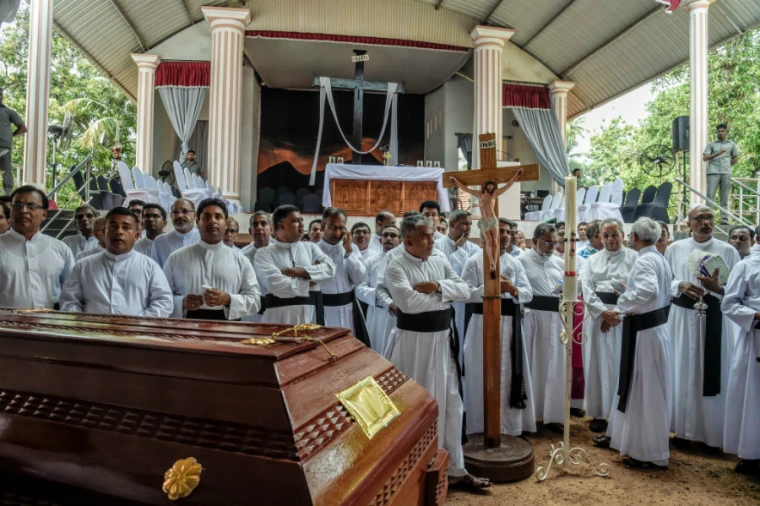
Sri Lankan Catholics held a funeral Mass April 23, 2019 for the victims of the attack on St. Sabestian Church in Negambo. Credit: Atul Loke/Getty Images)

Islamic State claims responsibility for Sri Lanka Easter bombings

 Sri Lankan Catholics held a funeral Mass April 23, 2019 for the victims of the attack on St. Sabestian Church in Negambo. Credit: Atul Loke/Getty Images)

Follow By Courtney Grogan
Colombo, Sri Lanka, Apr 23, 2019 / 07:09 am (CNA).- The Islamic State claimed responsibility Tuesday for the Easter bombings in Sri Lanka that killed at least 321 people and left 500 injured.

“The perpetrators of the attack that targeted nationals of the countries of the coalitions and Christians in Sri Lanka before yesterday are fighters from the Islamic State,” the Islamic State said through its Aamaq news agency April 23.

Sri Lankan officials suspected the local Islamist group, the National Thowheed Jamath, of carrying out the attacks, but one government spokesman added that it was likely that an international network also supported the attacks.

In the past, the Islamic State has claimed attacks perpetrated by others that support their ideology, however, the sophistication of the seven coordinated suicide bombings in three Sri Lankan cities points to the possibility of direct involvement.

Sri Lanka’s minister of defense Ruwan Wijewardene claimed Tuesday that the church bombings in Sri Lanka were in retaliation for the mosque bombings in Christchurch New Zealand, AP reported. The office of New Zealand’s prime minister responded to the claim by saying that they had not seen any intelligence to support the connection.

Funeral Masses were held April 23 for the victims of the attacks on St. Sebastian's Catholic Church in Negombo and St. Anthony's Shrine in Colombo.

Cardinal Malcolm Ranjith, Archbishop of Colombo, told EWTN that the local Catholic community has suffered tremendously because of the horrible massacre on Easter Sunday.

“We lost so many valuable lives in both churches ... a huge amount of people,” Cardinal Ranjith told EWTN News Nightly April 22.

The Sri Lankan cardinal said that he rushed to St. Anthony’s shrine as soon as he heard of the attack Sunday morning, but the police did not allow him to enter because they suspected that more bombs could be inside the church.

“From the outside I saw a lot of devastation outside the church,” Ranjith said. “When I saw so many bodies, I was completely moved and disturbed.”

The Knights of Columbus have pledged $100,000 in aid for victims of the Sri Lankan attacks to help Cardinal Ranjith rebuild and repair his Christian community.

“Terrorist attacks like those on Easter Sunday are the acts of those who reject the sanctity of life, human rights and religious freedom,” Carl Anderson, CEO and Supreme Knight of the Knights of Columbus said April 22.

“Globally, it is well documented that Christians are the most persecuted religious group today,” Anderson said. “Now is the time for every country to take concrete steps to protect their minority populations, including Christians, and to stop this persecution and slaughter.”

Investigations into the Easter attacks on two Catholic churches, an evangelical church, three hotels, and a private residence are ongoing. According to some reports, as many as 24 arrests have been made as Sri Lanka has declared a state of national emergency.

Pope Francis renewed his prayers for the victims in Sri Lanka and appealed for international support during his Regina Coeli address Monday.

“I pray for the many victims and wounded, and I ask everyone not to hesitate to offer this dear nation all the help that is necessary,” the pope said April 22.

“I also hope that everyone condemns these acts of terrorism, inhuman acts, never justifiable,” he said.

Tags: Sri Lanka, Cardinal Ranjith, Islamic State, Easter attacks 2019
(https://www.catholicnewsagency.com/news/islamic-state-claims-responsibility-for-sri-lanka-easter-bombings-26423?fbclid=IwAR07zWrXCwNRhdDErGgAIAaR7p2Ora4pUF4jLOf5aPXoVAxNpO1pF6nRfGE)